

Army Psychologists Officers through DSSC : Apply Online
Are you interested in contributing to the Pakistan Army’s mental health and well-being initiatives? Discover how you can be a part of this crucial mission as a Pak Army Psychologist Officer through the Direct Short Service Commission.
If you want to join Pak Army Psychologists job then see here basic eligibility criteria, test pattern, syllabus of initial tests, free practice tests, past papers and main responsibilities of Army Psychologists.
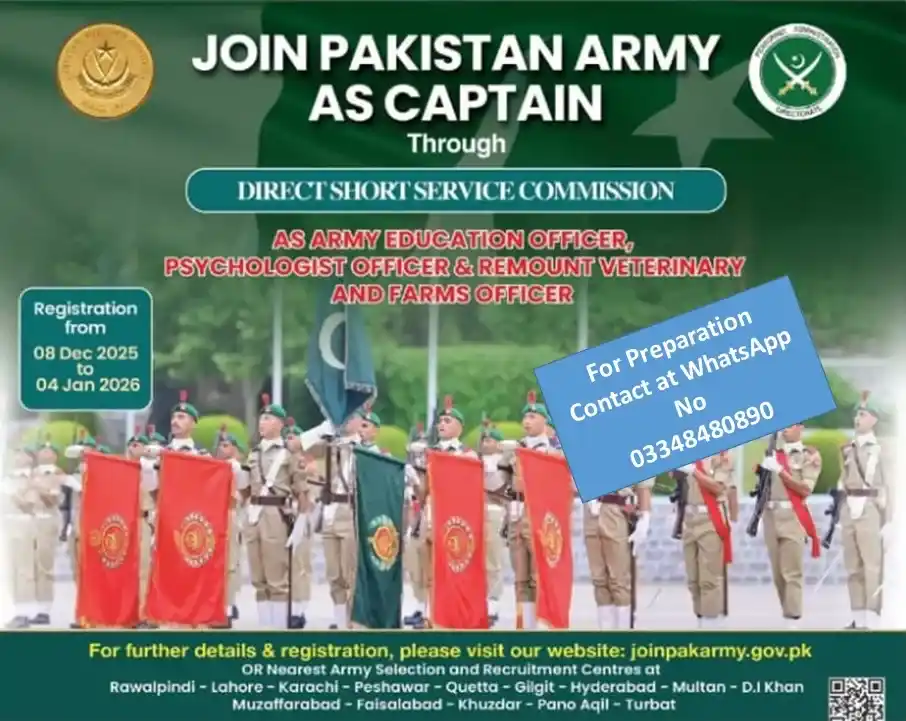
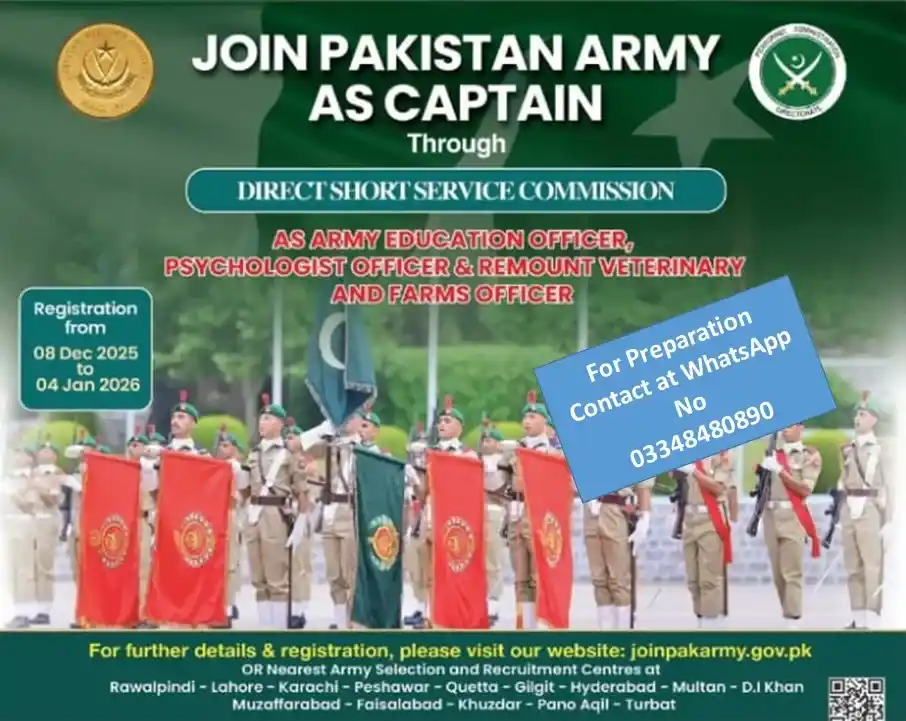
Start Date of Online Registration for Army Veterinary and Farm Officers:
Last Date of Online Registration for Army Veterinary and Farm Officers:
08 Dec, 2025
04 Jan, 2025
Related: Join Pakistan Army through Direct Short Service Commission (DSSC)
Eligibility Criteria for Army Psychologist Officers in Pakistan through DSSC
If you want to apply for Army Psychologists officers job then you must fulfill the criteria given below before apply for online registration at official website of Pak Army;
Age: 28 years
Minimum Height : 5’ 4” (162.5 cm) [See: How to increase Height?]
Weight : As per Body Mass Index [See: Weight as Per Height]
Educational Qualification: Hold a master’s degree in Psychology from a recognized institution. M.Phil / Ph.D degree holders will be preferred.
Skills Required: Demonstrate excellent communication and interpersonal skills. Exude empathy, understanding, and a passion for helping others.
Pak Army Psychologist uniform is same as normal Army officers use in working fields.
Related: How to solve Knee Knocking issue?
Test Pattern of Army Psychologists Officers Initial Tests
Join Pakistan Army as female psychologist. Following tests are being taken at Army Selection and Recruitment Centers after online registration through Official Website of Pakistan Army.
1:Intelligence Tests (Total Questions: 100, Total Time: 40 Min, Passing Marks: 50%)
Verbal Intelligence Tests
Non-Verbal Intelligence Tests
2:Academic Tests (Total Questions: 75, Total Time: 35 Min, Passing Marks: 50%)
Psychology MCQs
Syllabus for Psychologist in Written Examination of DSSC initial Tests
In the academic test of Army Remount Veterinary and Farm Officers jobs, following main topics are included to pass the initial tests at Army Recruitment and Selection Centers.
Introduction to Psychology: An overview of the field, its history, key theories, and various subfields within psychology.
Research Methods and Statistics: Learning about the scientific methods used in psychological research, including designing studies, collecting data, and analyzing results using statistical techniques.
Biological Psychology: Exploring the relationship between the brain, nervous system, and behavior, including topics like neuroscience, brain anatomy, and the influence of genetics on behavior.
Cognitive Psychology: Studying mental processes such as perception, memory, attention, problem-solving, decision-making, and language.
Developmental Psychology: Examining human growth and development across the lifespan, from infancy to old age, and exploring physical, cognitive, emotional, and social changes.
Social Psychology: Investigating how social interactions, group dynamics, and cultural influences impact individual behavior, attitudes, and beliefs.
Personality Psychology: Exploring various theories of personality, factors that shape personality development, and assessing individual differences.
Abnormal Psychology: Understanding psychological disorders, their classification, causes, symptoms, and various therapeutic approaches for treatment.
Learning and Behavior: Studying the principles of classical and operant conditioning, reinforcement, punishment, and observational learning.
Sensation and Perception: Examining how sensory organs process information from the environment and how perception shapes our understanding of the world.
Motivation and Emotion: Exploring the factors that drive behavior, including intrinsic and extrinsic motivation, as well as the nature and regulation of emotions.
Health Psychology: Investigating the psychological factors that influence physical health, including stress, coping mechanisms, and the mind-body connection.
Industrial and Organizational Psychology: Understanding the application of psychological principles to workplace settings, including employee motivation, leadership, teamwork, and organizational behavior.
Educational Psychology: Exploring how psychological principles impact teaching and learning, including educational assessment, instructional design, and classroom management.
Counseling Psychology: Learning about the principles of therapeutic counseling, effective communication, and techniques for helping individuals cope with personal challenges.
Cross-Cultural Psychology: Examining the impact of cultural and diversity factors on behavior, cognition, and mental health.
History and Systems of Psychology: Tracing the historical development of psychological theories and exploring the contributions of prominent figures in the field.
Ethics in Psychology: Understanding ethical considerations in research, practice, and the responsible treatment of research participants and clients.
Free Practice of Online Tests of Pak Army Psychologists Jobs
- Verbal Tests (Basic)
- Non-Verbal (Advance)
- Pak Studies Tests
- Verbal Tests (Advance)
- Psychologists Tests MCQs
- ISSB Tests Preparation
- Non-Verbal (Basic)
- English Tests MCQs
- Islamic Studies Tests
Related: Free Online Practice of Past Papers
What is Selection Procedure of Army Psychologists Officers?
Getting started on your path to becoming a Pak Army Psychologist Officer is an organized process:
Online Registration: Visit the official Pakistan Army website and complete the online registration form. Preliminary Tests: After registration, candidates will be called for preliminary tests, including intelligence and academic tests. Pre-Medical Examination at Selection Center Initial Interview: Successful candidates move on to the initial interview phase, where their potential and suitability for the role are assessed. Psychological Assessment: Given the nature of the role, candidates undergo a rigorous psychological assessment. It includes the following tests;
- Filling Bio Data Form
- Urdu Sentence Completion Tests
- English Sentence Completion Tests
- Word Association Test
- Picture Story Writing
- Pointer Story Writing
- Writing Merits and Demerits
- OPI Tests
Medical Examination: A comprehensive medical examination ensures candidates’ physical fitness.
Final Selection: Based on merit, the final selection list is prepared, and successful candidates are offered training.
Related: Join Pakistan Army through Army Education Corps
Related: Join Pakistan Navy as a Psychologist
What is Role and responsibilities of Army Psychologists Officers?
Pak Army Psychologists play a especial and multifaceted role in the Pakistan Army, contributing significantly to the mental health and overall well-being of soldiers and their families. Their responsibilities extend to various areas, each crucial for maintaining the psychological resilience of the armed forces. Here’s a detailed overview of their role and responsibilities:
Mental Health Assessment: Army psychologists assess the mental health of soldiers during various phases of their service, including recruitment, training, deployment, and post-deployment. They use standardized assessment tools and clinical interviews to identify any psychological concerns.
Counseling and Therapy: One of their primary responsibilities of Army psychologists is to provide individual and group counseling sessions to soldiers dealing with stress, anxiety, depression, or other mental health challenges. These sessions help soldiers cope with the emotional demands of military life.
Stress Management: Army psychologists develop stress management programs and workshops for soldiers, teaching them coping strategies to manage the unique stressors they face in combat and other high-pressure situations.
Trauma Support: In the aftermath of traumatic events, such as combat exposure or critical incidents, psychologists offer psychological first aid, crisis intervention, and trauma-focused therapy to help soldiers process their experiences.
Family Support: Army psychologists extend their services to soldiers’ families, providing counseling and support to spouses, children, and parents who may also experience emotional challenges due to their loved ones’ military service.
Combat-Related Issues: Army psychologists address combat stress reactions and symptoms of conditions like Post-Traumatic Stress Disorder (PTSD), helping soldiers understand and manage these challenges to maintain their mental well-being.
Leadership Consultation: Army psychologists collaborate with military leaders to enhance their understanding of soldiers’ psychological needs. They advise on leadership strategies that promote mental health and effective communication within units.
Preventive Programs: Army psychologists design and implement preventive mental health programs, workshops, and training sessions to equip soldiers with the skills to maintain their psychological fitness.
Resilience Building: They work on enhancing soldiers’ resilience by teaching them skills to adapt to adverse situations, bounce back from setbacks, and maintain mental strength.
Research and Assessment: Army psychologists conduct research to better understand the psychological challenges faced by soldiers and to develop evidence-based interventions that can improve their mental health outcomes.
Collaboration with Medical Professionals: They collaborate with medical professionals to ensure integrated care for soldiers with both physical and mental health concerns.
Reintegration Support: After deployments, Army psychologists assist soldiers in reintegrating into civilian life, helping them navigate the transition and manage any psychological challenges that may arise.
Education and Training: Psychologists educate soldiers about mental health, reduce stigma surrounding seeking help, and raise awareness about available support services.
In essence, Pak Army Psychologists Officers are dedicated to fostering the mental well-being of soldiers, offering them the support, guidance, and resources they need to navigate the unique challenges of military life. Through their expertise, compassion, and commitment, they contribute to creating a psychologically resilient and cohesive armed forces.
Related: Join Pakistan Air Force Education Branch as Psychologists
Join us at Social Media
- Join Facebook Group for any Query
- YouTube Channel for more understanding
- Instagram for Live Updates
- LinkedIn for Asking Questions
- TickTock
- Join WhatsApp Group-1
- Join WhatsApp Group-2
- Shaheen Forces Academy WhatsApp Community Group
Related: Join Pakistan Army PMA Kakul
FAQs about Army Psychologists through DSSC
A: The training program lasts for approximately six months, encompassing both theoretical and practical aspects of the role.
A: Yes, both male and female candidates who meet the eligibility criteria can apply for these positions.
A: While Psychologist Officers may be deployed to combat zones, their primary role is to provide mental health support and counseling rather than direct combat.
A: Yes, selected candidates are required to serve a specified duration in the Pakistan Army after completing their training.
A: The Pakistan Army encourages continuous learning and self-improvement. Psychologist Officers may have opportunities to pursue further education with proper approval.
A: Successful Psychologist Officers exhibit qualities such as empathy, strong communication skills, adaptability, and the ability to work under pressure.
A: Those females who have completed their degree of BS Psychology can join Pak Army, Pak Navy and Pakistan Air Force as a Psychologist. For more detail join Shaheen Forces Academy or visit pakshaheens.com
Related: Join Pakistan Army as a Commissioned Officer

PMA Initial Past Papers
By Captain
PMA Initial Past Papers PMA Initial Past Papers are a valuable resource for students preparing for the Pakistan Military Academy’s initial test. These past papers provide insights into the exam format, question types, and…
MCQs of PMA Long Course 153 (Part-8)
By Captain
PMA Long Course 153 Entrance Exam MCQs Preparing for the initial tests learn PMA Long Course 153 initial tests which require a comprehensive approach that includes studying from textbooks, practicing with past papers, and…
Laws of Motion MCQ in Physics
By Captain
Important Laws of Motion MCQ with Answers For those getting ready for their first academic exams in the Army, Navy, or Pakistan Air Force, Law of Motion MCQ with Answers are a great resource….

PAF Recruitment 2024 MCQs for Airman Tests
By Captain
Everything You Need to Know About PAF Recruitment 2024: A Complete Guide PAF Recruitment 2024 presents an exciting opportunity for individuals looking to join the Pakistan Air Force. The recruitment process typically includes various…
PMA Interview Questions Solved (Part-27)
By Captain
Preparing for Success with PMA Interview Questions When gearing up for a project management role, understanding PMA interview questions is essential for demonstrating your expertise and readiness. These PMA interview questions typically cover a…